Hidden Triplet Walkthrough
A Hidden Triplet is three digits confined to the same three cells of a unit. Those cells must contain those digits, so every other candidate can be removed from them.
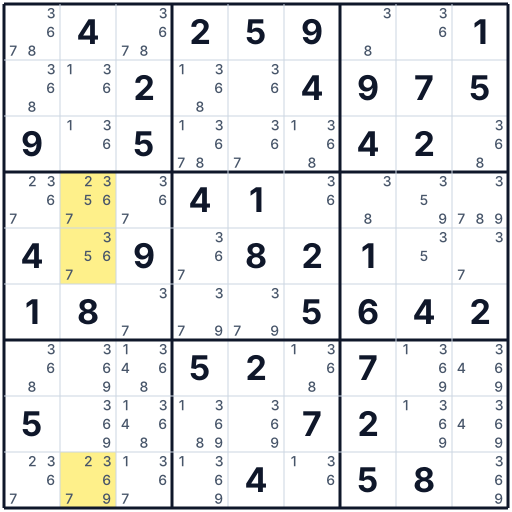
There is a Hidden Triplet in Column 2. Applying the Hidden Triplet eliminates 7 candidates (struck out in red below; any solved cells shown in green).
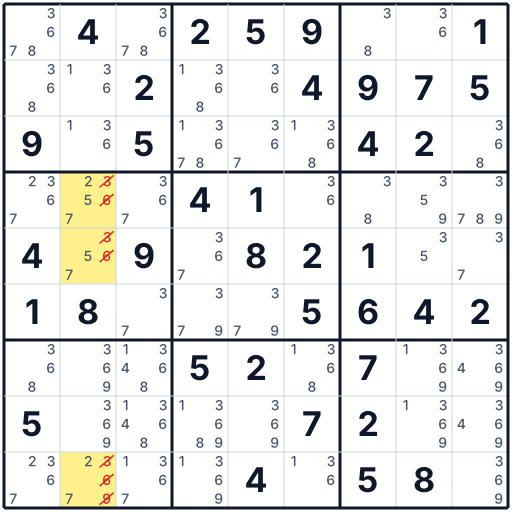
Reading this board
The pattern on this puzzle involves column 2. Work from the before-image above: find the hidden triplet for yourself before scrolling to the after-image, since the point of a worked example is the search, not the answer. No cell is solved outright by this move. The value is positional: 7 impossible candidates leave the grid, which is what makes the next round of scanning productive.
Why the deduction is valid
Three digits whose only homes in a unit are the same three cells must fill those three cells between them. As with the Hidden Pair, the deduction runs from the digits to the cells rather than the other way round, and the payoff is that every other candidate inside those three cells can be removed. None of the three digits needs to appear in all three cells — the pattern only requires that none of them appears anywhere else in the unit.
How to spot a Hidden Triplet on your own board
- Tally the unit: for each digit still missing, note which cells could hold it. Digits with only two or three possible cells are candidates for the pattern.
- Look for three such digits whose combined footprint covers exactly three cells. That footprint is the triplet.
- This is the technique where systematic tallying beats intuition. Hidden Triplets are close to invisible by eye, because the defining evidence is what is absent from the rest of the unit.
Common mistakes
- Requiring each of the three digits to appear in all three cells. Partial coverage is normal and still valid.
- Stopping after removing the extra candidates without re-reading the unit — the strip usually exposes Naked Singles or a Naked Pair immediately.
What to do next
After the extra candidates come out, the three cells behave as a Naked Triplet. If they share a second unit, apply the triplet’s eliminations there too.